Publication
Sackett v. EPA: The Scope of Clean Water Act Jurisdiction over Wetlands and Implications
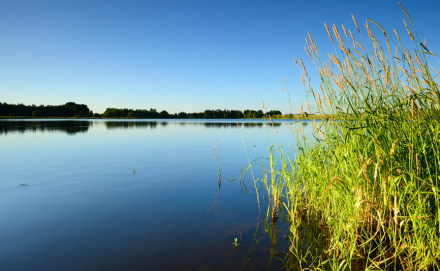
In the recent Sackett v. EPA United States Supreme Court decision, a majority of the Justices narrowed the interpretation of “adjacent wetlands” under the Clean Water Act (CWA). [1] All justices agreed that certain alleged wetlands on the Sacketts’ property, which were separated from Priest Lake, a navigable, intrastate lake, by a ditch and a creek, were not “waters of the United States” under the CWA. However, the Court split 5-4 on the interpretation of adjacent wetlands.
Relying heavily on the Rapanos [2] plurality, the Court concluded that adjacent wetlands now require a “continuous surface connection” with traditional navigable waters or relatively permanent bodies of water connected to traditional interstate navigable waters, making it difficult to determine where the water ends and the wetland begins. “Waters of the United States” includes only those wetlands that are “as a practical matter indistinguishable from waters of the United States.” The Court notes that “temporary interruptions” in surface connections or “illegally constructed barriers” cannot remove wetlands from federal jurisdiction.
The “continuous surface connection” test on its face provides clarity to the scope of the CWA and at the very least puts an end to the “significant nexus” test from Justice Kennedy’s concurrence in Rapanos. While the new test limits federal regulatory authority over wetlands, this narrowed interpretation of adjacent wetlands does not eliminate the ambiguity that has for years plagued interpretations of the jurisdictional scope of the CWA. As Justice Kavanaugh’s concurrence states, the Court’s interpretation of the scope of CWA jurisdiction “is sufficiently novel and vague” to “create regulatory uncertainty.”
How does this decision affect existing and future permits and jurisdictional determinations? Sackett does not change any separate legal obligations, and entities should not disregard any existing permits or jurisdictional determinations. However, projects that are still under development have an opportunity to reevaluate whether any onsite waters remain subject to CWA jurisdiction. Time is of the essence to withdraw any pending permit applications or jurisdictional determinations. There may be opportunities to amend or terminate a jurisdictional determination or permit, but any such requests will be fact-specific and may be delayed as the EPA and U.S. Army Corps of Engineers develop new guidance. While Sackett does not change obligations under existing permits, the decision could also have implications for any current enforcement actions or notices of violation.
Moving forward, certain wetlands that have a clearly tenuous connection to “waters of the United States” will not be subject to jurisdiction under the CWA, and the total acreage of wetlands subject to federal jurisdiction will decrease. However, there are many factors to consider before concluding a wetland is no longer subject to the CWA. “Continuous” suggests an uninterrupted extension of “waters of the United States.” But what about the temporary interruptions mentioned by the Court? How temporary is sufficient to maintain CWA jurisdiction? These questions will presumably be resolved as the EPA and Corps update their guidance and the Corps makes future jurisdictional determinations.
It is important to consider that a wetland that is no longer subject to federal regulation may be regulated by state law. Following Sackett, states may seek to increase or decrease the scope of protected wetlands within the particular state. Indiana amended its State Regulated Wetland Law in 2021, reducing the number of wetlands protected in the state following changes in the federal interpretation of the CWA’s scope. Wetlands that are not subject to regulation under the CWA may be considered Waters of the State and require a determination by the Indiana Department of Environmental Management.
[1] Sackett v. Environmental Protection Agency, 598 U.S. ¬¬__ (2023).
[2] Rapanos v. United States, 547 U.S. 715 (2006).
This publication is intended for general information purposes only and does not and is not intended to constitute legal advice. The reader should consult with legal counsel to determine how laws or decisions discussed herein apply to the reader's specific circumstances.