Publication
Immigration Enforcement: Trump 2.0
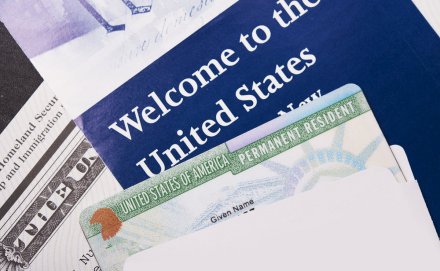
Many immigration stories start at the border, with U.S. Customs and Border Protection working to stem the flow of undocumented people seeking to enter the U.S., either without inspection or under the protection of our asylum laws. Americans (and American businesses) can likely expect changes in interior enforcement policies given stated positions on immigration made by President-elect Trump. While the border has been the leading immigration story for several years, the next chapter will likely focus on enforcement practices within the interior of the United States, largely carried about by the Department of Homeland Security (DHS) and its sub-agencies, U.S. Immigration and Customs Enforcement (ICE) and Homeland Security Investigations (HSI). Relevant to employers, DHS-ICE/HSI are responsible for interior immigration practices such as worksite enforcement and employment verification and we can expect that they will likely take a more proactive enforcement approach towards immigrants with questionable status.
Throughout our nation’s history, enforcement has been the domain of the federal government; however, with the expected approval of the incoming Trump Administration, some states may seek to expand their role in this area. Legislatively, over the past few years we have seen an increase in state-led immigration laws and ordinances and a willingness for governors (most conspicuously, Texas and Florida) to displace new immigrants from border states and move them to other states and cities. In addition, more states and communities are making E-Verify (additional employment eligibility security checks at the time of hire) mandatory in one form or another. Further action on the state level may therefore be a possibility.
We also anticipate that interior immigration enforcement activity will increase dramatically under the second Trump Administration, which could begin as early as President-Elect Trump’s inauguration on January 20, 2025. One mechanism through which DHS and ICE ensure that employers are complying with federal immigration law is through conducting I-9 audits. All U.S. employers are required by law to complete Form I-9 for everyone hired for employment in the U.S., including citizens and noncitizens, alike. However, the form is deceptively simple and errors on the Form I-9 (and the employer’s process to complete them) may result in steep penalties from the U.S. government.
Increases in these audit activities can be expected. To highlight this expectation, in 2020, the last year of Trump’s first presidency, the U.S. government conducted an estimated 12,000 Form I-9 audits. By comparison, in 2023, the Biden Administration conducted approximately 400. It would therefore not be hyperbole to estimate that internal I-9 audits by the U.S. government could increase tenfold (or much more) under the second Trump Administration. From the perspective of the U.S. government, an I-9 audit represents an efficient means of identifying individuals who are in the U.S. without status. Rather than knocking on individual doors, ICE need only audit the Form I-9s of employers that may be perceived as being susceptible to hiring improperly or undocumented workers.
Furthermore, the financial penalties for I-9 compliance violations may be used to support the enforcement and deportation activities of the federal government. The average penalty for technical (paperwork) violations on a Form I-9 is now approximately $2,200 (per form!), which may provide substantial incentive for DHS-HSI and ICE to conduct audits with employers who may utilize immigrant labor.
Given the likelihood that I-9 audits will be on the rise, as soon as Spring 2025, it is critical that employers be prepared for what to do if approached by DHS or ICE. First, employers must understand the difference between an I-9 audit and a warrant.
An I-9 audit begins with an ICE agent arriving at an employer’s worksite and serving the employer with a Notice of Inspection (NOI). The NOI will typically state that the employer has three business days to produce all Form(s) I-9 identified in the NOI. It is recommended that an employer who receives an NOI should thank the agents who served the document and inform them that they will be contacting legal counsel for review. Contacting legal counsel immediately can be crucial for two reasons. First, counsel may be able to negotiate with ICE to extend the review period—often up to ten business days—thus providing the employer with as many as seven additional business days to prepare for the I-9 audit. Second, employers may work with legal counsel during the interim period to review existing I-9s and identify any errors or omissions. This critical period may be used to fix any correctable errors on existing I-9s and possibly reduce any potential fine.
Alternatively, ICE agents, along with the other law enforcement, may present an employer with a warrant and request entry onto the premises. Unlike an NOI, a judge will sign the warrant. Warrants allow an ICE agent to immediately enter the place of employment and begin an investigation. These are more commonly referred to as ICE “raids,” because of their immediacy, regardless of the manner in which they are conducted.
Given the likelihood that interior immigration enforcement will balloon soon, we recommend that employers begin preparing now.
First, employers are encouraged to self-audit their Form I-9s to assess liability. To assist our employer clients with initiative-taking risk mitigation, Ice Miller’s Immigration Team offers I-9 checkups. The purpose of this checkup is to evaluate the current state of an employer’s I-9 program and make recommendations to strengthen compliance, with the goal of eliminating prospective liability from any government audit. Proactive self-audits also create goodwill with the federal government should the employer ever be subject to an I-9 audit. Internally, proactive I-9 audits also allow for employers to create a contingency plan that can be implemented in the event they are subject to an I-9 audit in the future.
Second, during periods of increased interior enforcement, it is advisable that employers consult with immigration counsel to create both I-9 audit and immigration “raid” plans. Such plans may include designating certain employees responsible for engaging with government personnel and provide those individuals with guidance regarding the types of information they are (and are not) required to share with enforcement agents. By creating such plans, employers and employees will be prepared to calmly manage such interactions in the event the business is the subject of interior immigration enforcement activity.
Ice Miller recognizes that future immigration enforcement activities will impact many employers and we are ready and prepared to assist our clients by guiding you through a self-audit, representing you in an adversarial I-9 audit, helping develop a raid plan, or answering questions about how changes in immigration policies may impact your workforce.
This publication is intended for general information purposes only and does not and is not intended to constitute legal advice. The reader should consult with legal counsel to determine how laws or decisions discussed herein apply to the reader's specific circumstances.